
The Space You’re In - Episode 5
A conversation with Aggie Armstrong
The Space Between: Inside Aggie’s Creative World
For artist Aggie Armstrong, the studio is never simply a place to work. It is a state of mind.
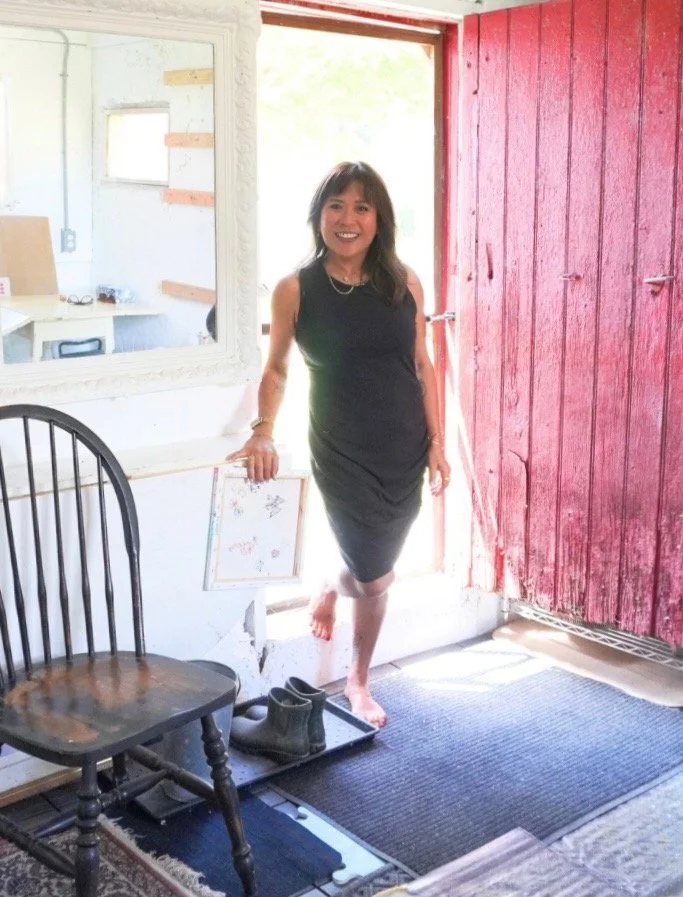
A mixed-media artist whose practice moves between painting, embroidery and textiles, Aggie works across two very different spaces: a home studio inside a historic farmhouse and a converted century-old milk house tucked into the surrounding property.
One is connected to family life. The other offers something increasingly rare—a place with no distractions, no Wi-Fi and, for Aggie, the freedom to disappear into the work.
From Paint to Thread
Her artistic practice began with painting. During COVID, however, she found herself searching for a new way to move through a creative block.
“During COVID everyone was trying to do something with their hands,” she says. “I felt like there was a block that I was going through with painting, and so I tried everything.”
She tried knitting. It was too slow.
“I need instant gratification,” she admits.
Instead, she turned to needlework, eventually bringing hand-embroidered stitching onto her painted canvases.
What began as small accents grew into something much more integral to the work, with embroidery becoming a defining feature of her compositions.
Then came fabric.
“I slowly added fabric,” Aggie says. “It was almost like quilting onto a canvas.”
Today, she cuts and reconstructs acrylic-painted canvases, sewing them together with vintage and designer fabrics. The resulting work sits somewhere between painting and textile with a layered, tactile feel.
Inspiration, Everywhere
Aggie’s inspiration is similarly expansive. She finds inspiration everywhere from books to Pinterest and of course nature.
Flowers, in particular, inform her colour palette, even if she acknowledges the irony of being a self-described city girl living in the country.
“I have a love-hate relationship with the country because I feel so isolated here,” she says. “And yet I get a lot of inspiration here.”
That contradiction seems to live inside the Milk House, too.
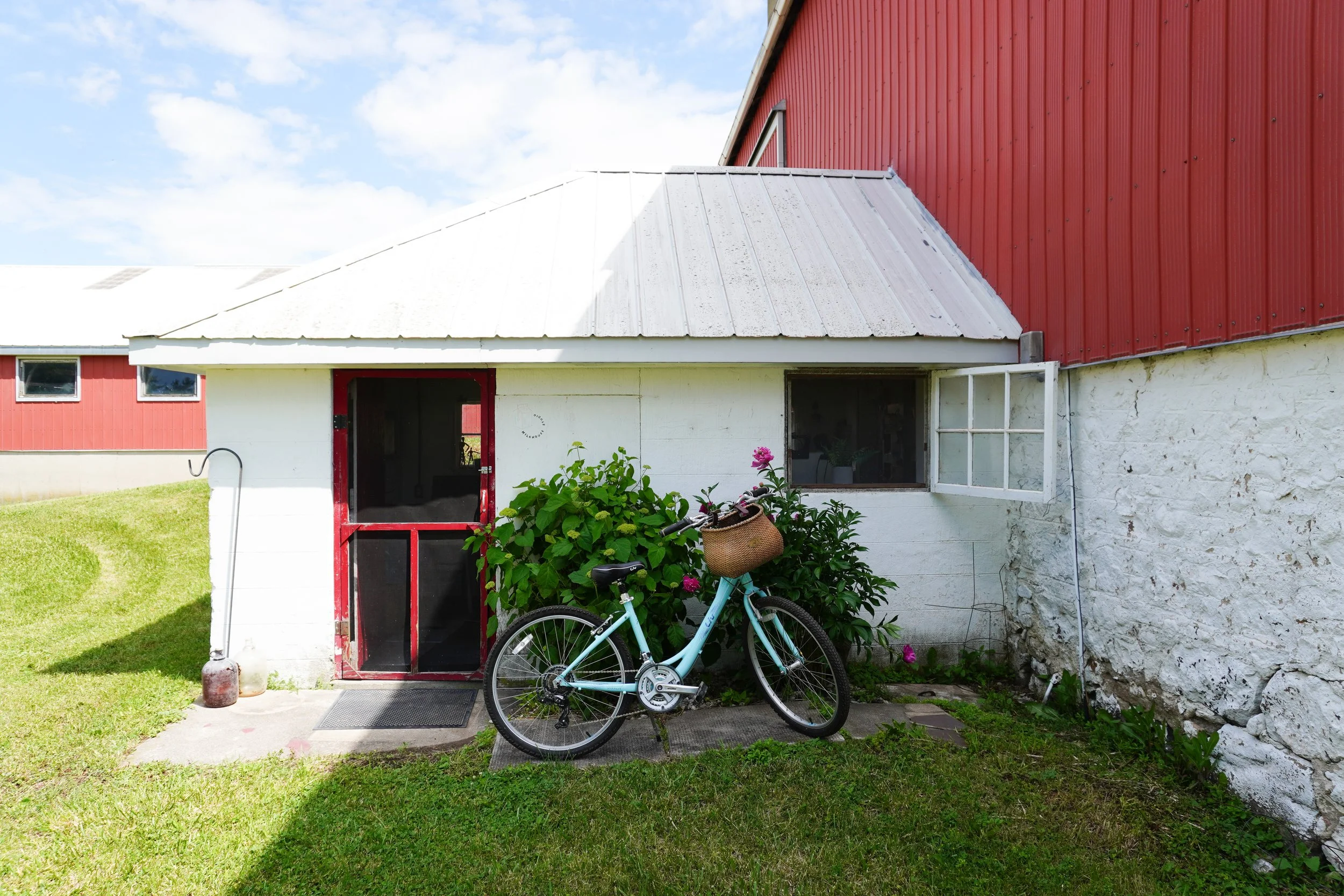
The Milk House
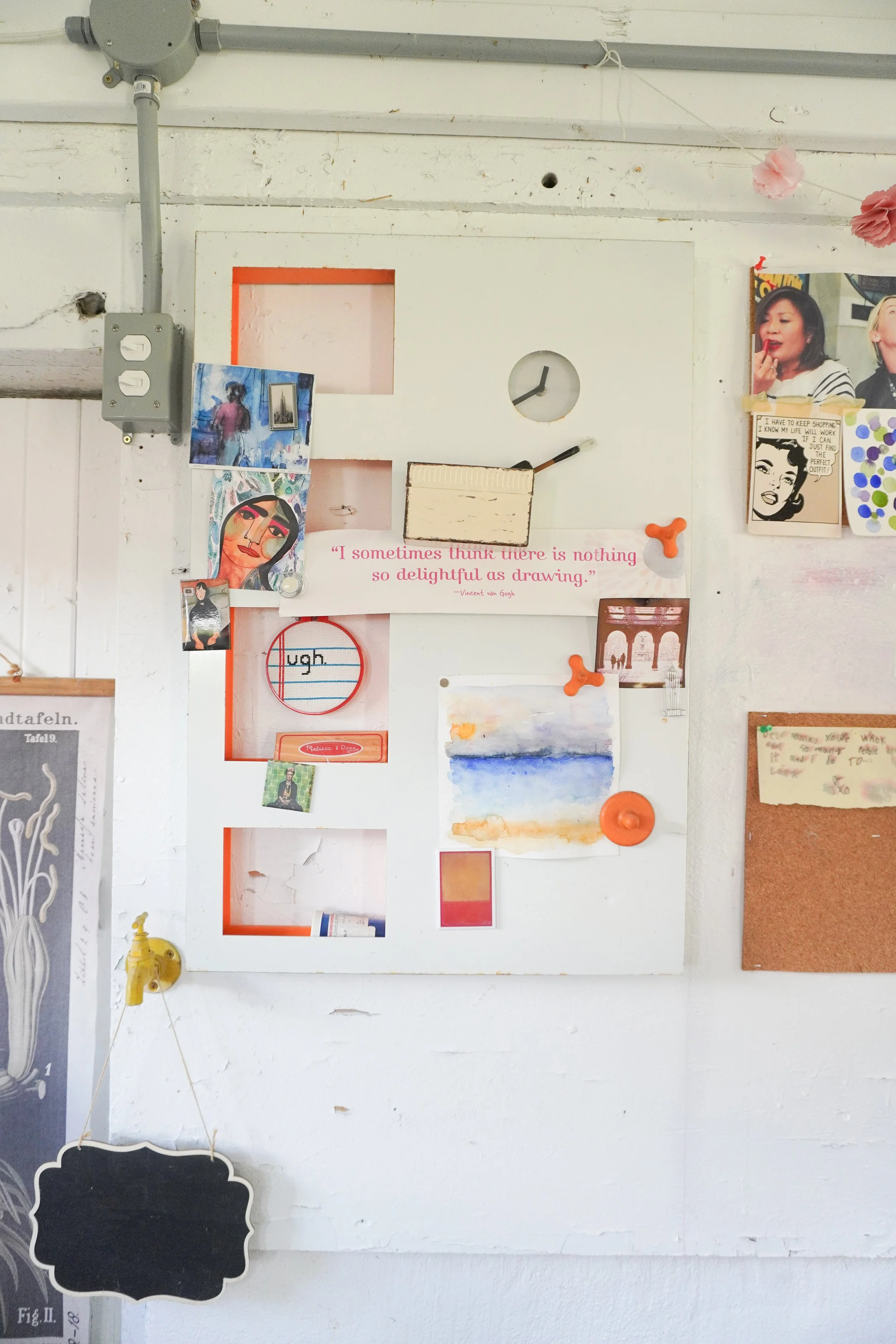
Once a working dairy building on the family farm, the structure immediately captured Aggie’s imagination when she arrived at the property nearly two decades ago.
She envisioned an artist haven—a studio, gallery and workshop space rolled into one.
During the pandemic, the vision became reality.
“When you’re stuck working at home and need another space to be creative,” she says, “you look at outdoor spaces.”
The Milk House is rustic, uninsulated and usable only during the warmer months. But its imperfections are part of its appeal. A vintage sink, natural light flooding the space and no Wi-Fi make it a perfect creative space.
For Aggie, that last detail may be the most important.
“I don’t get a signal in there, so I work continuously,” she says. “No distractions whatsoever.”
The Milk House feels, she says, “almost like when I’m in an artist residency. All I think about is the art.”
The Freedom of Home
Her home studio is different. It is warmer and more practical, particularly for sewing and working with fabrics. But it is also woven into the rhythms of everyday life: the dog, her daughter returning from school, the constant pull of home.
In the Milk House, she can work from dawn until late into the evening. At home, she works around family life.
And yet, the home studio has its own particular freedom.
“The only good thing that I do love about the house,” Aggie laughs, “is that I don’t have to wear pants.”
The joke is quintessentially Aggie: irreverent, practical and a reminder that creative freedom can take many forms.
A Little Structure, A Lot of Experimentation
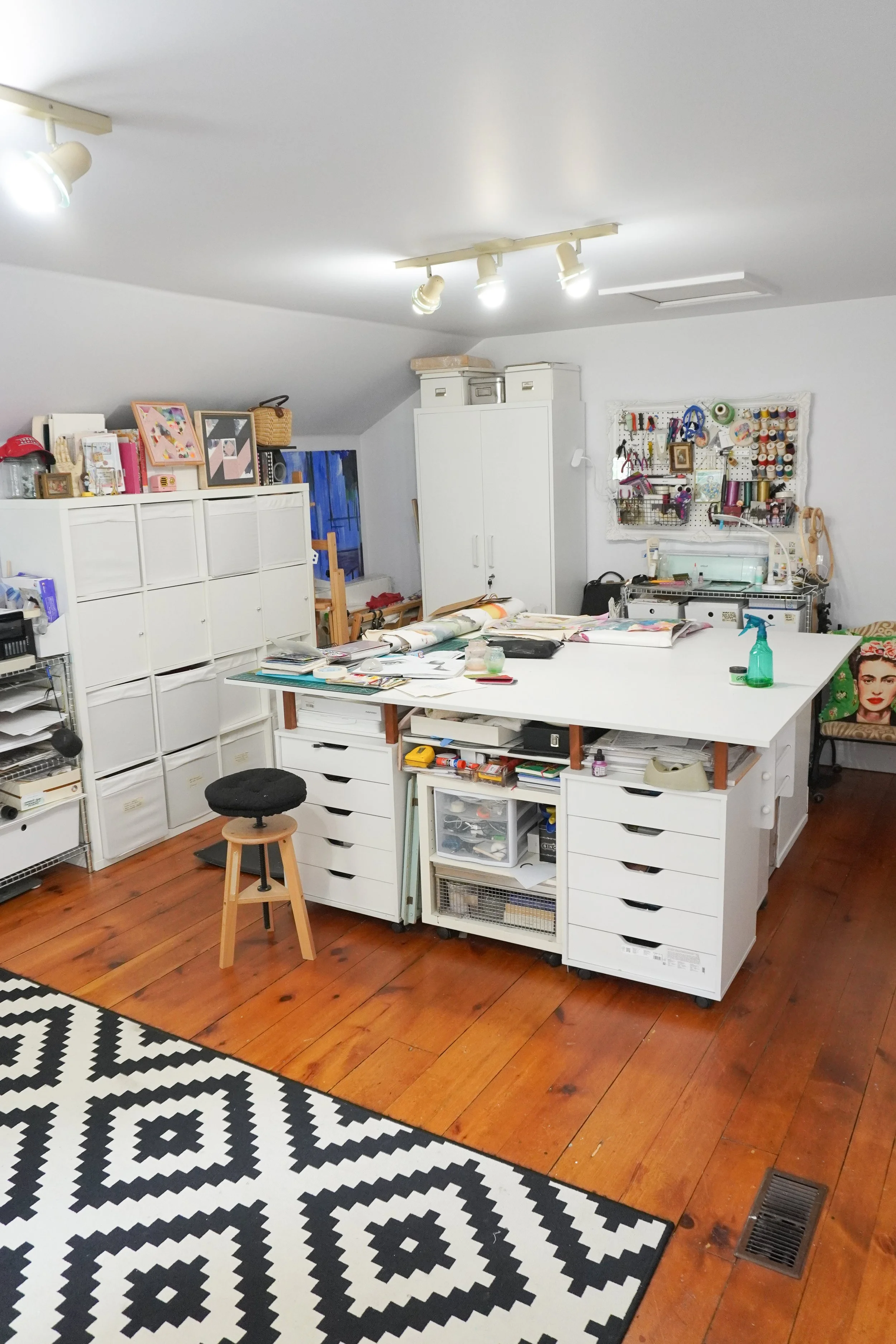
The contrast between Aggie’s two studios extends to her creative process, which is itself a study in opposites.
She carefully plans for exhibitions, creating a loose schedule—or what she jokingly calls a “syllabus”—to keep herself on track. But within that framework, experimentation takes over.
“There is a lot of trial and error,” she says.
Fabric may refuse to behave. A painted canvas may fail to match the vision in her head. A piece may need to be abandoned or reworked. Aggie embraces that uncertainty while still giving herself enough structure to reach the finish line.
Her ability to balance intuition with organization, she believes, has come with experience.
“It’s also my creative business,” she says. “I have to have both the organization and the creative flair for it to flourish.”
The Next Chapter
That merging of the practical and the imaginative is reflected in the spaces she has created. Neither studio is static. Both have evolved as her work has evolved and both remain open to what comes next.
Aggie’s vision for the future is bigger still. She imagines transforming the entire barn into a year-round creative destination: fully insulated, equipped with hot and cold water, part studio, part gallery, part workshop space.
For now, though, she is content to work with what she has.
“Being a creative, being an artist, you don’t have to have a big space or even more than one space,” she says. “If push comes to shove, I really could just work in a corner with a table.”
Still, she acknowledges the gift of having two distinct worlds in which to make.
“I do love that I have this privileged existence that I have two studios.”
One is a place to retreat. The other is a place to return to.
Together, they mirror the artist herself: structured yet spontaneous, rooted yet restless, always looking for the next material, the next idea and the next way to make a space feel like her own.
Check out Episode 5 on Spotify!